The Familiar Composer Trap: Choose a Concert by the Sound You Want
Choose a rural concert by sound rather than reputation: compare the performers, instruments and programme format to find an evening that suits your listening mood.
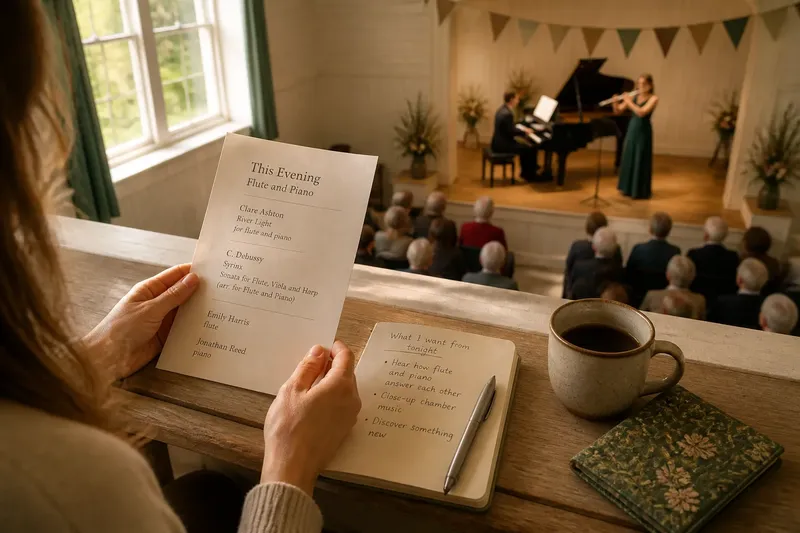
Choose a concert by sound, not just by composer: a familiar name on a village hall listing may tell you less than the instruments and performers beside it. Before booking, decide whether you want close-up chamber music, songs, or a different kind of listening experience.
Look beyond reputation
A composer’s name may bring to mind a melody from a film, a school performance or another concert. That association can make a listing appealing, but it does not tell you which works will be played or how they will sound in this performance.
Read the whole listing before deciding. Note the performers, instruments and format, such as solo playing, a vocal recital or a small ensemble. If the details are missing, check the organiser’s page or ask the venue rather than guessing from the composer’s name.
Use programme details
Instrumentation tells you who or what is making the music. A listing for flute and piano names a different combination from one for voice and strings; it does not, on its own, predict whether the music will feel gentle or forceful. Piece titles and short notes can add context, but treat suggestive titles as prompts rather than descriptions.
- Performers: Check whether the listing names soloists or an ensemble. If you want to follow one player closely, choose a solo recital or small group; if you would rather hear several parts interact, choose an ensemble.
- Instruments: Look for an instrument you are curious about. If it is named, consider the concert; if the listing is vague, ask the organiser what forces are planned.
- Voice: Check whether singers are included and whether texts or song titles are listed. If words interest you, choose a vocal programme; if you prefer instrumental music, confirm the format before booking.
- Programme format: Look for solo works, songs or chamber pieces. If the format matches how you want to listen, keep it on your shortlist; if not, compare another event.
- Programme notes: Check whether notes describe changes in performers or musical character. If the description gives you a useful point of curiosity, use it to guide your choice; if it stays vague, decide from the concrete details instead.
- Unfamiliar names: Check whether the listing gives a short description of the works. If one detail catches your interest, consider going without knowing the music; if the programme still feels unclear, ask for more information or choose a listing with fuller notes.
Choose your listening focus
Instead of trying to predict an entire evening, choose one thing you would enjoy noticing: the sound of a particular instrument, the exchange between two players, or the difference between vocal and instrumental music. This keeps the decision grounded in what the listing actually says.
Say you are considering an invented village concert listing for flute and piano, with one familiar composer and one unfamiliar name. Your starting preference is to hear how two instruments answer each other, rather than to recognise every tune. You check the programme and confirm that both works use flute and piano, then choose this event over a listing that names only a composer and gives no performers. The trade-off is clear: you have a better basis for the kind of sound you want, but you still cannot know exactly how either work will feel in the room.
Questions about choosing?
Should I choose a composer I already know?
Choose a familiar composer if you want the pleasure of returning to music or recognising a style. Check the works and performers too, since the composer’s name alone does not describe the full programme.
What if I recognise none of the names?
Start with the instruments, performers and format. If one detail sparks your curiosity, you can choose the event without knowing the music in advance.
Can a listing tell me how the music will sound?
A listing can tell you which instruments and performers are planned, and sometimes whether the programme includes voice or solo works. It cannot settle how the performance will feel to you, so treat descriptions as clues rather than promises.
Do I need to listen to recordings first?
No. A recording is an option if you want to recognise a work before the concert, but it is not necessary for choosing from a listing. Reading the programme or arriving with one question in mind may be enough.
Make the booking decision
Write down the listening experience you want, then compare it with the named performers, instruments and programme format. If two listings remain appealing, choose the one with the clearer match to that preference; if essential details are absent, ask the organiser before booking.
To choose a concert by sound, use the composer as one clue among several. A specific curiosity about the performers or instruments gives you a useful reason to go, while leaving room for the music to differ from what you expected.