Church, Hall or Barn: What Each Room Asks of a Listener
Church, hall or barn: learn how room shape, surfaces and seating affect what you hear, so you can choose a place that suits your listening.
Church, hall or barn: the room can change which musical details reach you clearly and how comfortably you follow a performance. Before choosing a seat at a rural concert, look at the shape of the space, the surfaces around you and the position of the performers; then decide whether you want a close, direct sound or a broader sense of the room.
Read the room
Start with what you can see from the entrance or booking information. Notice whether the venue is long and narrow, broad and shallow, or irregular; whether the ceiling is high or low; and whether the audience faces one fixed end. These features offer clues, not promises. A small ensemble may sound quite different from a solo voice in the same place, and an occupied room can feel different from an empty one.
Next, check how seating is arranged. Rows facing a platform usually make it easier to keep your attention on the performers. Loose chairs, benches along the walls or tables left in place may mean that some listeners are angled towards the music rather than squarely in front of it. Look for pillars, a raised platform, open doorways or a low beam that could block your view.
If you can choose a seat, think about the kind of attention you want to give the music. A central position often gives a straightforward view, while a side seat may reveal the performers’ interaction but place you at an angle to the sound. If the event is unreserved, arrive with time to look around and ask an usher or organiser where the performance will take place.
Church acoustics
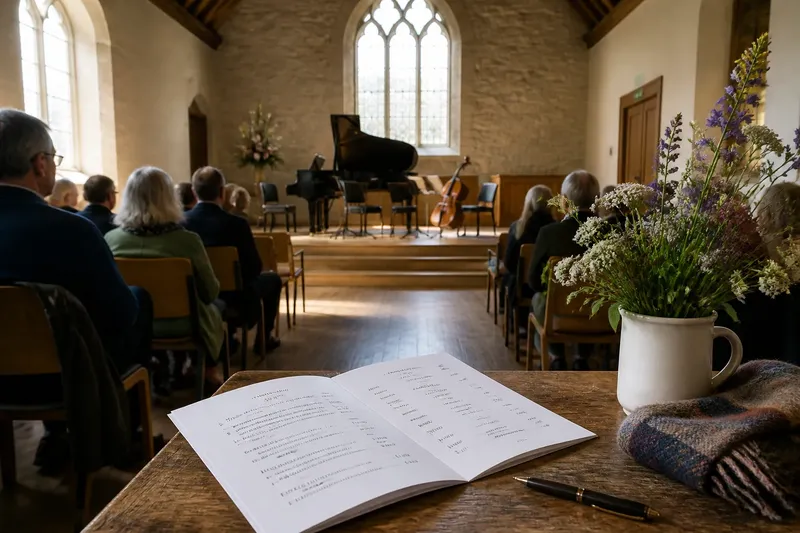
A church often has a tall ceiling, hard floor and stone, plaster or timber surfaces. Sound may linger after a note has ended, giving sustained voices and instruments a spacious quality. That resonance can also blur quick passages, especially if the performers are far away or the music has many simultaneous lines.
In a long nave, the front rows may offer a direct view and a clear sense of attack: bow changes, consonants and the start of a phrase can be easier to follow. Farther back, the sound may feel more blended, with more of the room’s reverberation around it. A side aisle can be a useful option if the central seating is crowded, though a pillar may interrupt sightlines.
For music with delicate, fast-moving detail, consider a position that is not too far from the performers and gives you an unobstructed view. For a choir, organ or sustained ensemble, you may enjoy hearing how the sound fills the space, even if individual notes seem less sharply separated. Listen for the way a final note trails away, and notice whether the next phrase begins before that resonance has faded.
A church is not automatically echoing. Carpets, curtains, wooden fittings, the size of the congregation and the placement of the performers all affect what reaches your seat. Treat the room’s appearance as a first clue, then let the opening music refine your impression.
Village hall sound
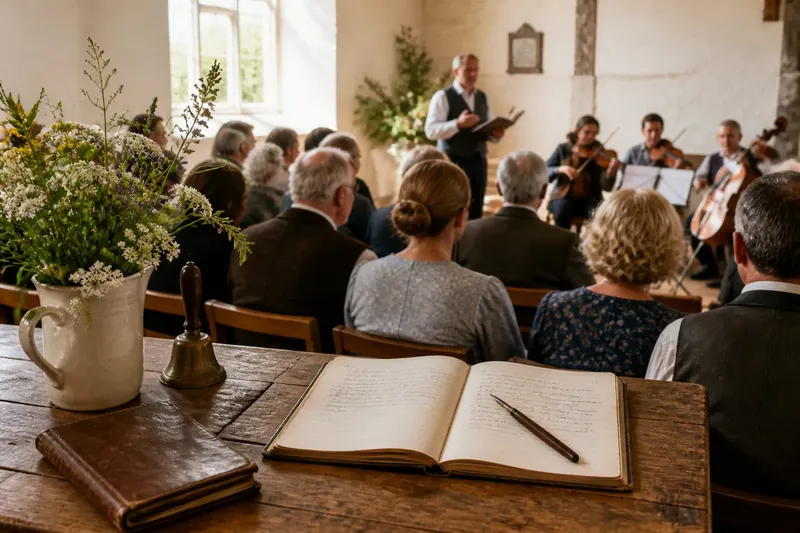
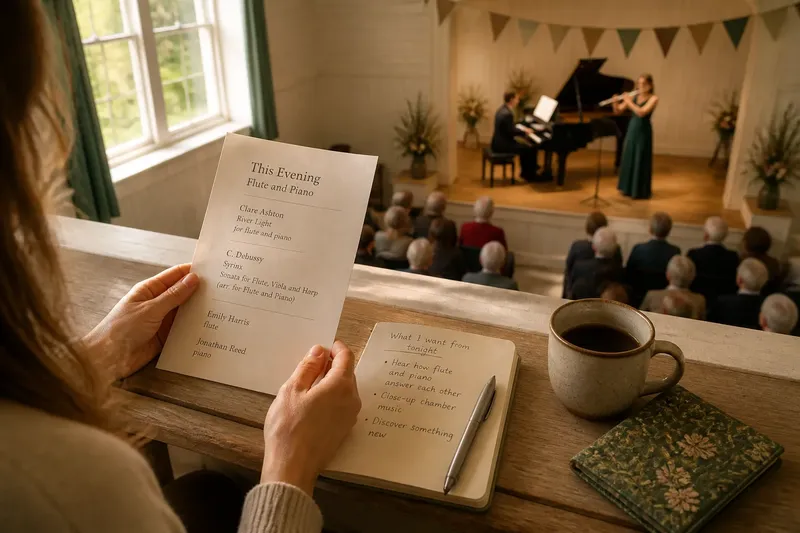
A village hall is usually arranged for practical gatherings, so it may have a lower ceiling, a flat floor and a mixture of hard and soft surfaces. Stacked chairs, curtains, wall panels and a small platform can all affect how sound carries. The result can feel relatively close and clear, but a bare hall may also make certain sounds seem bright or exposed.
Look for the performers’ position before settling in. If they are on a platform at one end, a central seat with a clear view is a simple starting point. If they are on the floor or in a corner, a seat facing them directly may matter more than sitting in the middle of the room. Avoid choosing only by proximity: being very close can make it harder to take in the whole ensemble or see players who sit behind one another.
In a compact hall, small movements and quiet exchanges between musicians can be easier to notice. You may hear a page turn, a breath before an entry or the contrast between a soft passage and a forceful one. These details can make the performance feel immediate. If the sound feels too concentrated, try a seat a little farther back or off the central axis, where the ensemble may blend more evenly.
Pay attention to everyday noise as well. A serving hatch, entrance door or coat area may be close to the audience, and late arrivals can cross the room. If you prefer to listen without interruption, choose a place away from the route people are likely to use, while keeping a clear view of the performers.
Barn room character
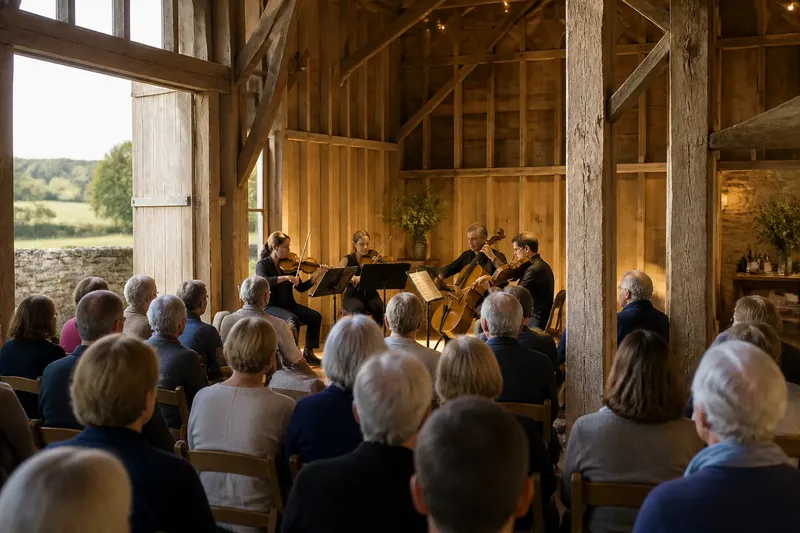
A barn or converted farm building can have an irregular layout: exposed beams, a high roof, timber walls, stone sections or a large open floor. Some venues retain a sense of spaciousness; others have been fitted with curtains, rugs or seating to make performances more intimate. Because each conversion differs, do not assume that exposed wood means a warm sound or that a high roof means a long echo.
Check where the audience and performers are placed. A platform at one end of a long barn may leave the rear seats quite distant, while a central arrangement can give listeners a closer view from several directions. A large beam, post or change in floor level may matter more than the room’s overall shape. If the venue shares space with a bar or reception area, note whether that area remains open during the music.
In a barn, the sound may vary noticeably from one part of the room to another. A seat near a wall can feel different from one in the open centre, and a high roof may make the performers’ sound seem less direct. Choose a spot that lets you see the musicians’ faces and hands, especially if you want to follow exchanges between players. If you are more interested in the overall atmosphere, a little distance can help you hear the ensemble as a whole.
For an invented example, imagine you are choosing between a central chair and a side seat in a converted barn. The central chair gives you a clear view of the full group, while a timber post partly blocks one player from the side seat. Choosing the central chair should make it easier to follow that player’s entrances and the ensemble’s changes of focus.
Choose your seat?
Where should I sit for clear detail?
Look for a direct view of the performers and avoid a place where a wall, pillar or other listeners obscure the stage. A position near the middle of the audience area is a sensible starting point, but the room’s shape and the ensemble’s placement matter more than the label on the seat.
Is the front row always best?
No. The front may bring you close to individual sounds, but it can make the ensemble harder to take in and may put you below a raised platform. If you want to follow several players, choose a place with a clear view across the group, even if it is farther back.
What if I arrive after choosing a seat?
Listen to the opening moments before deciding that the room is uncomfortable or unclear. If there is a suitable opportunity to move without disturbing others, try a different area; otherwise, use the view and sound you have, and notice which details remain easy to follow.
Should I ask about the room before booking?
Yes, if access, seating or a particular view matters to you. Ask the organiser whether seating is reserved, where the performers will be placed and whether the venue has step-free access or a quiet area. For access arrangements, rely on the venue’s current information rather than guessing from photographs.
Settle into listening
Once seated, take a moment to notice the room without trying to judge it. In a church, listen for how long a sound lingers; in a hall, notice how clearly a phrase begins; in a barn, attend to whether the ensemble feels close or spread out. These are simply ways to orient yourself, not rules about what the music ought to sound like.
If the programme begins with a quiet piece, resist the urge to keep shifting while the audience settles. A small adjustment before the performance can help: move a bag from underfoot, make sure you have a clear view, and leave space for others to pass. Once the music starts, stay attentive to how the room shapes your experience rather than comparing it with an imagined ideal.
Church, hall or barn, the most useful seat is the one that lets you see comfortably and listen with the least distraction. For a church, consider distance and lingering sound; in a village hall, check directness and everyday traffic; in a barn, inspect sightlines and the spread of the audience. A glance at the room before you sit down can help you choose where the music is easiest for you to follow.