Before Printed Programmes, How Village Concerts Shared Their Music
Discover how village concerts shared music before printed programmes, from spoken introductions to local custom, and understand what those channels could offer.
How did listeners know what a village concert was playing before printed programmes became familiar? Before printed programmes, concert context could come through a host’s words, a service or community’s customs, and music people already knew. The balance varied by place and occasion, so it is more accurate to describe several ways of sharing information than one universal custom.
Speech at gatherings
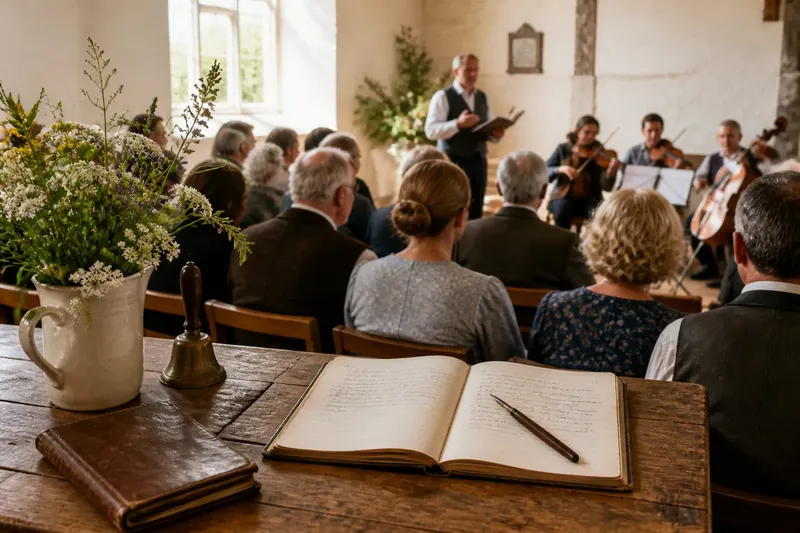
At a church service, a local celebration or a concert in a village room, someone might announce a piece or explain its place in the event. The speaker could be a musician, host, clergy member or organiser. Such remarks might name the next item, introduce a performer or tell listeners what would happen after the music.
These spoken cues served practical purposes as well as interpretive ones. A host could mark a transition or explain when the audience should remain seated. In a small community, the speaker might also be known to those present, making the announcement part of the gathering rather than a formal lecture.
Speech had limits: people arriving late could miss it, and a name spoken once was difficult to check later. A short announcement could orient the room, but it could not provide a lasting record for listeners to revisit.
Custom and familiarity
Not every musical occasion depended on a detailed introduction. In a service or a gathering with established local customs, the order of events might be understood by regular attendees. Familiar songs, dances or musical forms could also carry meaning through repeated use, even when nobody explained them afresh.
That familiarity was unevenly shared. A newcomer might not know why a tune belonged in a particular setting, while a long-time attendee might recognise it immediately. This is a useful distinction when describing music before printed programmes: the absence of printed notes did not necessarily mean an absence of context, but some of that context was local and not equally available to everyone.
For a visitor, the simplest clue might have been the occasion itself: a service, a seasonal gathering or a community event. That setting could explain why music was being heard, even if it did not identify every piece.
Print as a record
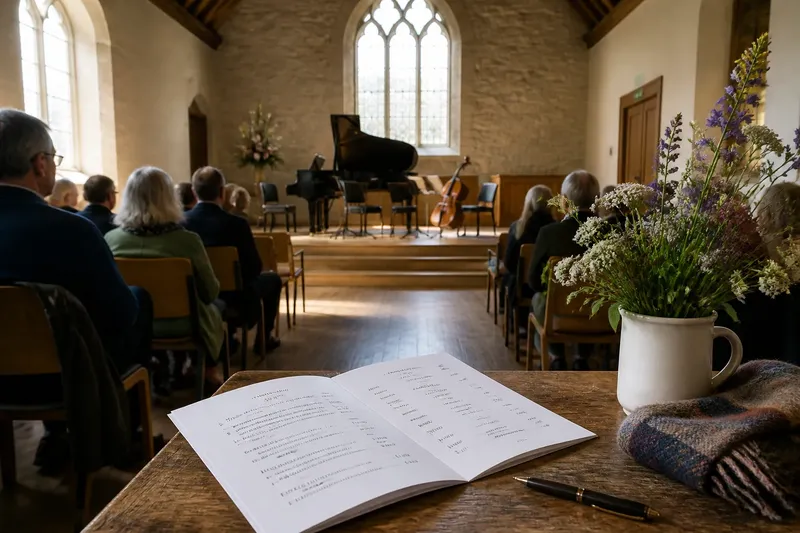
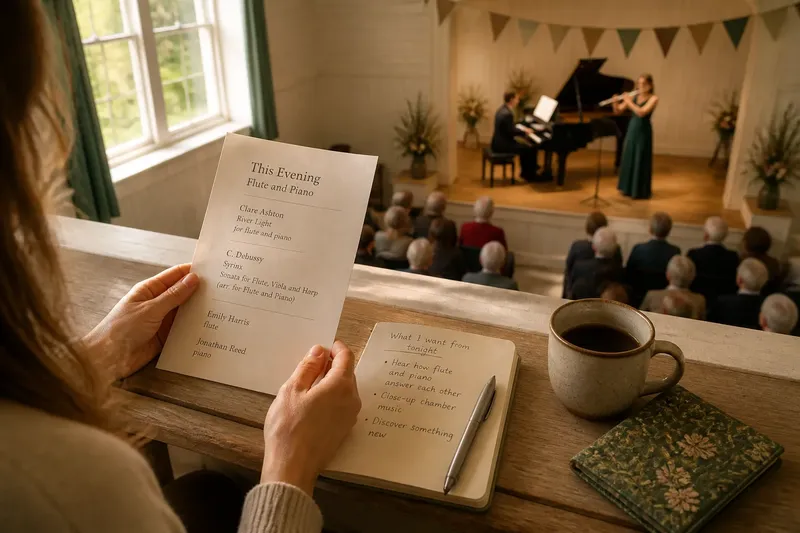
A printed programme could gather names and sequence on a page, where an audience member might consult them again. Notes, when included, could add information about a composer, a text or the performers. The page also made it easier to share the same written details across an audience, though the content and usefulness of any programme depended on what its organisers chose to include.
Print did not simply replace speech or custom. A spoken welcome could still set the occasion; familiar conventions could still guide regular attendees. A printed list was a different channel: it could preserve names and order, while spoken remarks could respond to the gathering in the moment.
Think of printed programmes as one more way of making context available, not as the point when concerts first acquired meaning. Their value was in putting some information into a form listeners could keep in front of them.
How did concert context travel?
Did every village concert have an introduction?
No single pattern applied to every place and occasion. A host might speak at one gathering, while another relied on familiar customs, the event’s setting or an audience’s prior knowledge.
Could listeners identify music without printed notes?
Sometimes they could recognise a familiar tune or understand its role from the occasion. A newcomer, however, might not share that knowledge, so recognition should not be assumed for every listener.
What did a printed programme add?
It could put the order of pieces and selected names or notes on a page that remained available during the event. It did not necessarily explain every work or replace a spoken welcome.
What should a modern account avoid claiming?
Avoid suggesting that all audiences heard the same kind of introduction or had the same local knowledge. Unless a specific place and period are documented, describe speech, custom and print as possible channels rather than a fixed historical sequence.
A cautious comparison
Say an imagined village gathering includes a familiar hymn, followed by music from visiting performers. The organiser gives a brief spoken welcome and names the visitors, but there is no printed list. Regular attendees may recognise the hymn and understand its place in the gathering; a newcomer can learn who is performing from the welcome, but still may not know the name of the opening piece. A printed programme for that same imagined event could preserve the performers’ names and sequence for later reference, while still leaving some musical context unexplained.
This comparison is invented, not evidence about a documented concert. It shows the trade-off between channels: speech can be immediate but easy to miss, custom can be meaningful but local, and print can be revisited but only contains what someone put on the page.
Reading the evidence
When describing a particular concert tradition, start with the evidence for that place and period: a surviving programme, an event notice, a diary or a local account may reveal what was announced or printed. If those records are absent, keep the claim modest. Say that music could be introduced through speech or shared custom, rather than asserting what audiences everywhere experienced.
That qualification keeps the history useful without flattening differences between a church service, a village celebration and a formal concert. Before printed programmes, concert context was not one missing booklet; it was information carried through several channels, each with its own reach and limits.